
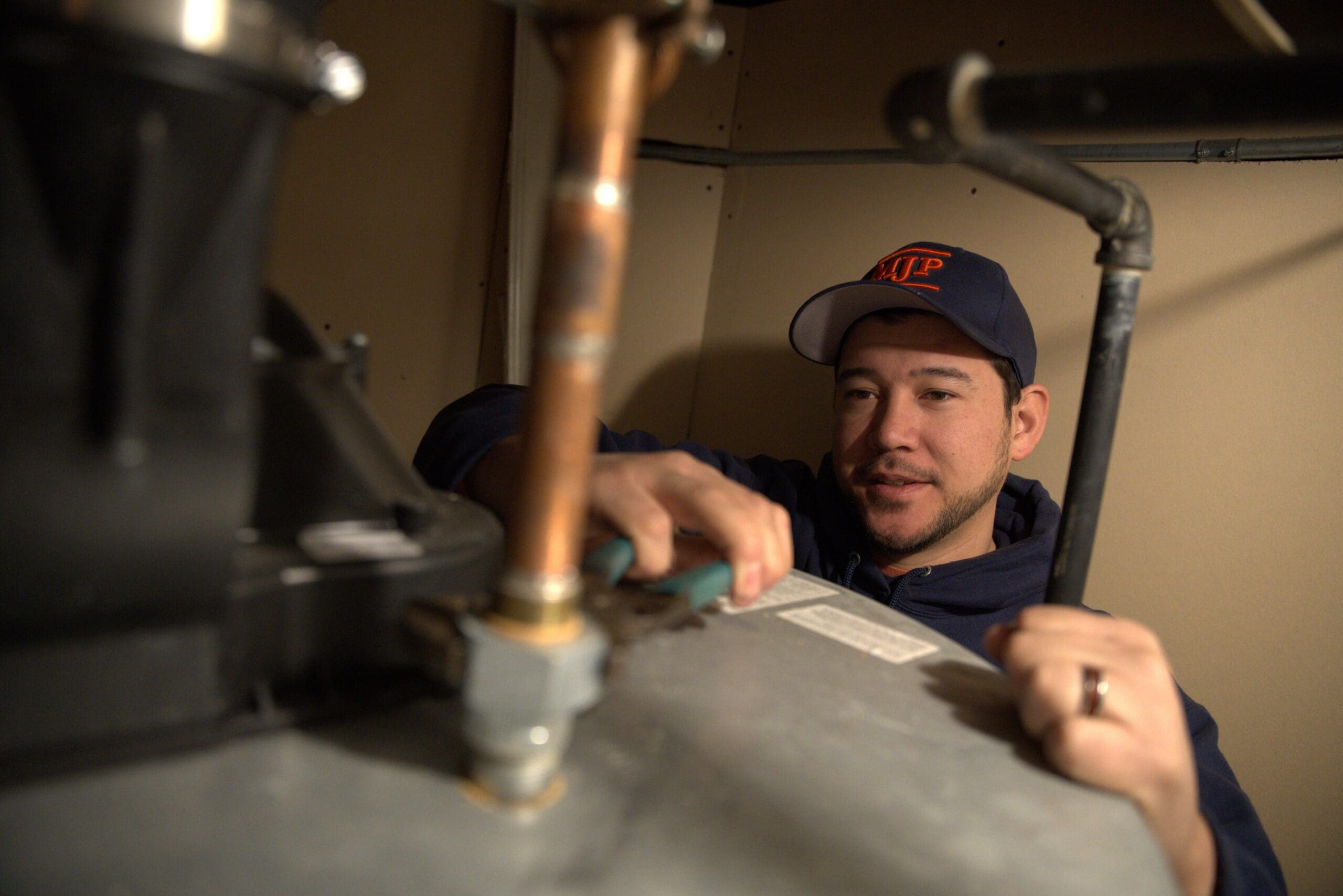
Summer Is a Smart Time to Pay Attention to Water Heater Problems
Many homeowners assume water heater issues are mostly a winter concern, but summer is often when small performance problems become easier to notice.
If your hot water runs out quickly, temperatures fluctuate unexpectedly, or your water heater is making unusual noises, those may be signs that maintenance, repair, or replacement should be considered before colder weather arrives.
For homeowners across Chicagoland and the Northwest suburbs, summer can be a good time to address water heater concerns before fall and winter place greater demand on the system.
Why Water Heater Problems Often Go Unnoticed During Summer
Unlike frozen pipes or sump pump failures, water heater issues rarely feel urgent at first.
Most homeowners adapt gradually to declining performance:
- Hot water does not last quite as long
- Water temperatures fluctuate occasionally
- Recovery time gets slower
- Strange noises become “normal”
- Small leaks or rust are easy to ignore
Because these changes often happen gradually, many homeowners postpone dealing with them until the problem becomes disruptive.
The reality is that small warning signs often appear months before a water heater fails completely.
For homeowners in Arlington Heights, Mount Prospect, Des Plaines, Schaumburg, Park Ridge, and surrounding communities, summer provides an opportunity to identify these issues early and make informed decisions before colder weather increases demand.
Why Does My Hot Water Run Out So Quickly?
One of the most common complaints homeowners notice is that hot water simply does not last as long as it once did.
You may find that:
- Showers become shorter
- Multiple family members cannot shower consecutively
- Appliances compete for hot water
- Recovery times increase
- Hot water runs out faster during normal daily use
This does not automatically mean replacement is necessary.
Sometimes the issue is related to maintenance, sediment buildup, aging components, thermostat issues, or capacity concerns. However, it is usually worth evaluating before performance continues to decline.
A professional can help determine whether the issue points to a repair, maintenance need, or a larger water heater replacement decision.
Why Is My Water Heater Not Getting Hot Enough?
If the water is warm but not hot, the issue may be connected to a thermostat setting, a heating element, sediment buildup, or an aging unit that is no longer performing efficiently.
Homeowners often notice this when:
- Shower water never gets fully hot
- The temperature drops quickly
- Hot water is inconsistent throughout the day
- Appliances do not seem to receive enough hot water
This is a good example of a problem that may feel minor at first but can become more frustrating over time.
What Does It Mean When a Water Heater Makes Popping or Rumbling Sounds?
Water heaters should operate relatively quietly.
If you begin hearing:
- Popping sounds
- Rumbling noises
- Banging or knocking
- Excessive vibration
Sediment buildup may be affecting performance.
Popping and rumbling noises often happen when minerals settle at the bottom of the tank. As water heats beneath that buildup, the system may become noisier and less efficient over time.
While some noise is common in older units, significant changes in sound are worth investigating.
Is a Water Heater Leaking From the Bottom Serious?
Water around the base of the unit should not be ignored.
A water heater leaking from the bottom may be caused by a drain valve issue, condensation, loose connections, or a problem with the tank itself.
Some leaks are repairable. Others may indicate that the tank is deteriorating.
Look for:
- Water pooling near the unit
- Rust or corrosion around the base
- Moisture around connections
- Drips that return after being wiped up
If water keeps appearing around the unit, it is best to have the source identified before damage spreads to flooring, walls, or nearby belongings.
Should I Repair or Replace My Water Heater?
Replacement often becomes the better long-term option when a water heater has recurring problems, visible corrosion, declining efficiency, or is nearing the end of its expected lifespan.
Every situation is different, but homeowners should consider:
- Age of the system
- Frequency of repairs
- Performance issues
- Energy efficiency
- Visible wear
- Whether the unit is properly sized for the household
The goal should never be to replace equipment unnecessarily. The goal is always to help homeowners understand whether a repair makes sense or whether replacement would provide better long-term value.
If you’re weighing repair-versus-replacement decisions for other plumbing systems as well, visit our Resources Hub for additional homeowner guidance on preventative maintenance and common plumbing concerns.
How Long Does a Water Heater Usually Last?
Most traditional tank water heaters last around 8–12 years, though lifespan depends on water quality, usage, maintenance, installation quality, and overall system condition.
A water heater may still run after that point, but older systems can become less reliable and less efficient.
If the unit is getting older and performance is already changing, it may be time to start planning instead of waiting for a full failure.
Is Summer a Good Time for Water Heater Maintenance?
Yes. Summer can be a smart time to check water heater performance because homeowners are not usually thinking about hot water problems yet.
That gives you time to:
- Address small issues before colder weather
- Plan for repair or replacement without pressure
- Improve efficiency
- Reduce the chance of surprise failure later
- Understand whether the unit is still meeting household needs
At MJP, we recommend a practical, prevention-first approach for all seasonal plumbing concerns. Earlier in the year, that might mean checking for spring thaw plumbing problems after winter. During heavy rain season, it might mean making sure sump pumps are ready before the next storm. With water heaters, summer is a good time to notice what is changing before the system is under heavier demand again.
What Water Heater Maintenance Is Worth Doing?
Homeowners do not need to overcomplicate water heater maintenance, but a few basic checks can help identify early warning signs.
You can:
- Look for visible rust or corrosion
- Check for moisture around the unit
- Listen for new or unusual noises
- Notice whether hot water runs out faster than before
- Pay attention to changes in utility bills
- Keep the area around the unit clear
Some maintenance tasks should be handled by a professional, especially if they involve valves, pressure, electrical components, gas connections, or draining/flushing the system.
Why Chicagoland Water Heaters Face Unique Challenges
Hard water, seasonal temperature swings, and older housing stock throughout many Northwest Chicago suburbs can place additional demands on water heater systems.
Over time, mineral buildup and changing household usage patterns can affect efficiency and performance, making routine evaluation especially valuable for local homeowners.
While many water heater issues develop gradually, local conditions can accelerate wear and make small performance changes easier to overlook until they become larger problems.
When It Makes Sense to Call a Professional
If you are experiencing any of the following, it may be worth having your system evaluated:
- Hot water does not last as long as it used to
- Water temperatures fluctuate unexpectedly
- Strange noises have developed
- Visible corrosion or leaks are present
- The system is showing signs of age
- Energy bills seem unusually high
- You are unsure whether repair or replacement makes more sense
Many issues can be addressed more affordably when identified early, but the longer performance problems continue, the fewer options homeowners sometimes have. But if you find yourself in need of a plumber, Jason Haro recommends MJP:
“Great communication and honest pricing. The crew explained the work clearly and felt attentive throughout. This is my go-to for future plumbing needs.”
That is the kind of experience MJP aims to provide: clear explanations, practical options, and no pressure to choose a solution that does not fit the situation.
Talk Through Your Water Heater Concerns with MJP
If you have noticed changes in your hot water system, MJP Chicagoland can help you understand what is happening and what your next steps might be.
We provide residential and commercial plumbing services throughout Chicagoland and the Northwest suburbs, including Arlington Heights, Mount Prospect, Des Plaines, Schaumburg, Park Ridge, and surrounding communities.
Our team focuses on clear communication, practical recommendations, and solutions designed to last.
Whether you are considering maintenance, repair, or replacement planning, we are happy to help you evaluate your options.
Request Service or Call to Talk It Through with an experienced member of the MJP team.
FAQs About Water Heater Problems
Why are my energy bills increasing if nothing seems wrong?
Water heaters can become less efficient over time due to sediment buildup, aging components, or declining performance. Increased energy usage may be one of the earliest warning signs that maintenance or evaluation is needed.
Why does my hot water run out faster than it used to?
Hot water may run out faster because of sediment buildup, aging components, thermostat issues, or a unit that no longer fits the household’s needs.
Is a leaking water heater always an emergency?
Not always, but water around the unit should be checked quickly. Some leaks come from valves or connections, while others may indicate tank deterioration.